
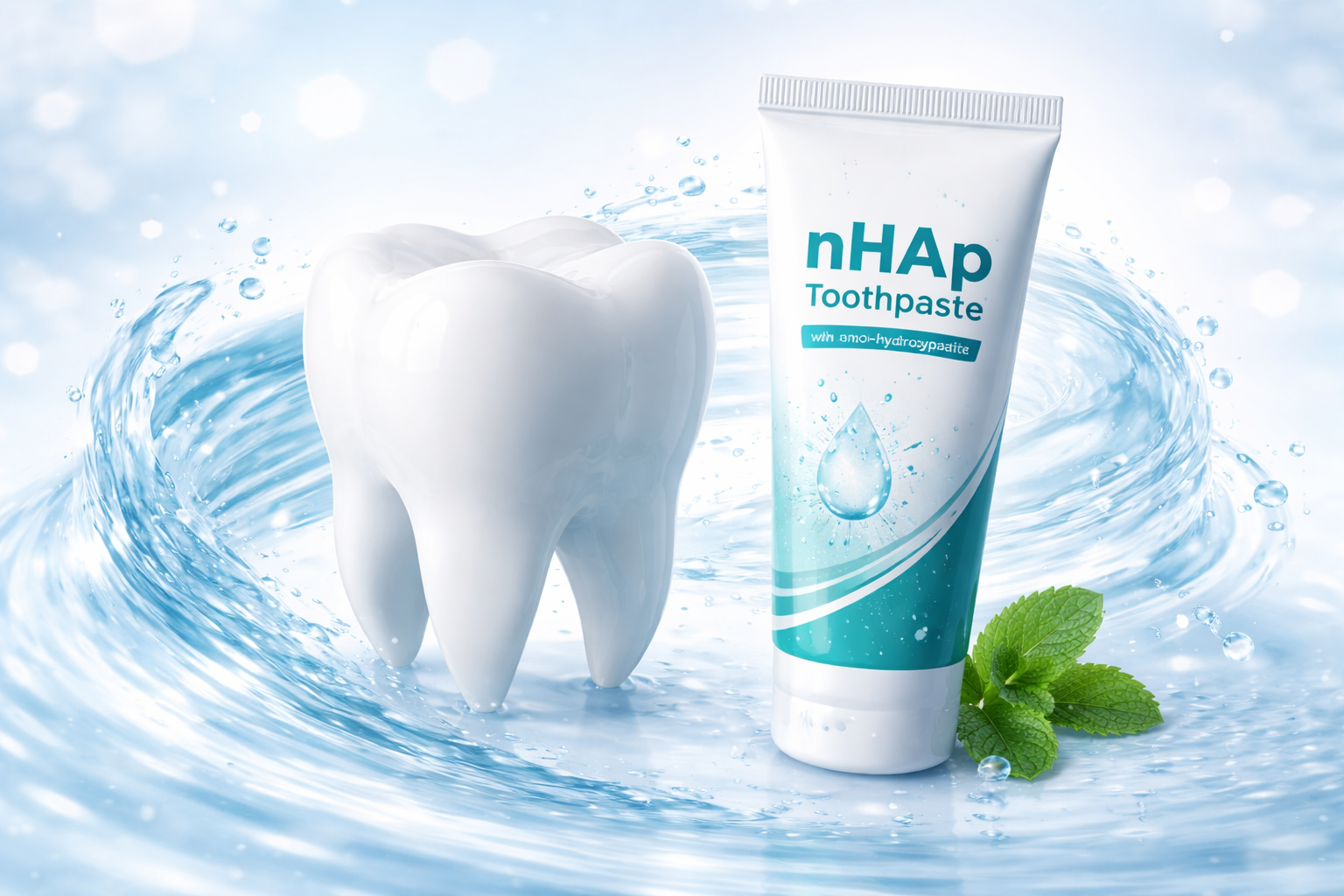
Weak, sensitive, or damaged teeth constitute one of the most widespread types of dental complaints in the world and affect the quality of life by causing pain, dietary limitations, as well as being constantly mindful of the fragility of teeth. Solutions provided have been limited to symptomatic ones, including desensitizing toothpastes giving temporary relief of pain, fluoride application offering surface-level hardening, or invasive dental treatments to treat significant damage over the decades. None of these methods actually provides a solution on a fundamental level where tooth structure is repaired and rebuilt.
Contents
- Learning the Origins of Sensitive, Weak, and Damaged Teeth.
- The regeneration and reconstruction of damaged teeth by Nano Hydroxyapatite.
- The Reason Nano Hydroxyapatite Is the best compared to Fluoride in Damaged Teeth.
- Traditional Sensitivity Treatment vs Nano Hydroxyapatite Repair
- Who is the greatest beneficiary of Nano Hydroxyapatite Toothpaste?
- Dente91 Ultra Shield: Nano Hydroxyapatite to the MAXimum Results.
- Frequently Asked Questions
Learning the Origins of Sensitive, Weak, and Damaged Teeth.
Sensitivity of the teeth, weakness, and damage are all results of the deterioration of the enamel that reveals the layer of dentin. Enamel erosion takes place through various routes, namely acidic food and drinks, which demineralise enamel by washing away calcium and phosphate ions; aggressive brushing of teeth with hard-bristled toothbrushes, which erodes enamel using mechanical forces; grinding or bruxism of teeth, which develops micro-fractures and thinning in enamel; acid reflux or vomiting, which exposes the teeth to stomach acid; and natural ageing processes, which thin enamel over decades.
The loss of enamel or the appearance of imperfections exposes dentin that is situated beneath. The dentin has thousands of microscopic tubules, which are directly connected to the tooth nerve. These tubules carry external stimuli like heat, cold, sweetness, or acid to the nerve and result in sharp, shocking pain known as tooth sensitivity. Also, reduced enamel renders teeth susceptible to cavities, cracks, and fissures, as well as structural collapse under normal chewing forces.
The regeneration and reconstruction of damaged teeth by Nano Hydroxyapatite.
- Surface repair
The surface repair takes place when nano hydroxyapatite particles attach to the enamel to form microscopic cracks, pits, and other imperfections, creating a smoother and stronger surface that is resistant to further damage and attachment of bacteria. - Tubule sealing
The process of tubule sealing is when nanoparticles are deposited in tubules that are left exposed on the dentin and layer mineral deposition, which physically seals the channels, preventing the transfer of pain to the nerves and giving immediate relief from sensitivity. - Deep remineralisation
Deep remineralisation is a process where nano hydroxyapatite enters demineralised portions in enamel and dentin, where mineral deposition occurs, which reinstates structural integrity and enhances micro hardness. - Cavity repair
When nano hydroxyapatite is used to remineralise early cavities and white-spot lesions before they turn into cavities, cavity repair is attained, effectively reversing instead of just preventing further decay. - Enamel hardening
Enamel hardening is achieved due to the constant mineral deposition process that makes the enamel more resistant to future attacks by acid, mechanical erosion, and bacterial activity.
The Reason Nano Hydroxyapatite Is the best compared to Fluoride in Damaged Teeth.
Fluoride has been used as the default agent of treatment of weak or damaged teeth for decades, but nano-hydroxyapatite provides a range of critical advantages that make it a better option. The action of fluoride is to transform a thin surface layer of hydroxyapatite into fluorapatite, a harder but chemically distinct mineral. This surface covering provides some acid resistance but does not address structural damage or deep demineralisation of enamel. Also, fluorapatite is relatively brittle and can fracture under mechanical stress, making it less resilient compared to natural hydroxyapatite.
Traditional Sensitivity Treatment vs Nano Hydroxyapatite Repair
| Feature | Traditional Sensitivity Treatment | Dente91 Ultra Shield with nHAp |
| Mechanism | Temporary symptom masking | Enamel repair |
| Duration of Relief | Temporary, returns when stopped | Long-lasting, cumulative improvement |
| Structural Repair | None fixes damage | Deep remineralization and strengthening |
| Cavity Repair | Cannot repair existing cavities | Repairs cavities |
| Clinical Results | Gradual sensitivity reduction | 2X remineralization in 8 days* (*Data on file) |
| Biocompatibility | Chemical agents, not natural | Identical to natural tooth composition |
| Long Term Health | Maintains weakness, prevents worsening | Continuously strengthens and repairs |
Who is the greatest beneficiary of Nano Hydroxyapatite Toothpaste?
Though nano hydroxyapatite can be beneficial to any person in terms of its enamel-strengthening properties, some target audiences show the most significant improvements when switching to nano hydroxapatite toothpaste like Dente91 Ultra Shield. Patients with chronic tooth sensitivity due to exposed dentin experience quick relief because nano-hydroxyapatite closes tubules and repairs enamel damage. People who have lost enamel strength due to acidic diets, eating habits, or acid reflux can restore it regularly through remineralisation. Individuals with early cavities or white spot lesions can reverse damage before professional intervention is required.
Dente91 Ultra Shield: Nano Hydroxyapatite to the MAXimum Results.
Dente91 Ultra Shield is paraben-free, SLS-free, and free of fluoride, making it safe for anyone, including children, pregnant women, and sensitive individuals. The biomimetic method means the user is applying the same mineral that teeth are made of, instead of introducing foreign chemicals. Dente91 toothpaste provides a scientifically advanced and clinically proven method of repairing and protecting sensitive, weak, or damaged teeth.
Dente91 Ultra Shield is a highly developed formulation of nano hydroxyapatite, which has been demonstrated to achieve 2x remineralisation in eight days* (*Data on file). It is combined with Lactoferrin, Potassium Nitrate, and Xylitol in a fluoride-free, biocompatible formula to treat tooth damage comprehensively and is safe for daily use.
Do not rely on temporary solutions for sensitivity or assume weak enamel is permanent. Repair tooth damage with the power of nano hydroxyapatite and experience the transformation that true biomimetic restoration can bring to oral health and quality of life.
Frequently Asked Questions
- How fast will nano-hydroxyapatite toothpaste desensitize teeth?
The loss of sensitivity is normally experienced within the first few days of using Dente91 Ultra Shield, and a substantial change is usually seen within two weeks. - Is it possible to heal cavities with nano-hydroxyapatite, or should dental care be done?
Nano hydroxyapatite can reverse cavities that appear as white-spot lesions before the development of full cavities.
- Why use nano-hydroxyapatite toothpaste?
Nano hydroxyapatite offers multiple benefits compared to professional fluoride treatments. While fluoride varnishes provide surface-level support, nano hydroxyapatite repairs structural damage and enables deep remineralisation.